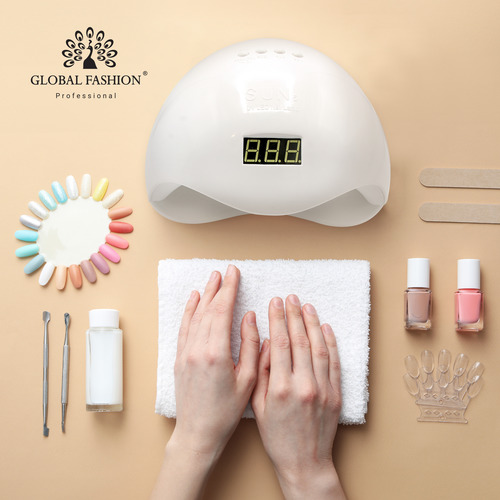
If your manicure lasts for weeks, with gel polish remaining flawless, chip-free, and shiny for days, know this: the secret lies not only in the gel polish formula itself. The real “magic” is hidden in the nail lamp — it’s what determines whether your manicure stays perfect or quickly loses its fresh look.
However, most of us choose a lamp based on just two options — UV and LED. We may understand that they are different, but we often don’t know exactly how — only professionals really do.
In this article, we’ll take a detailed look at the features of UV and LED lamps and show you how to choose the right device to take your nail care to an entirely new level.
What is a UV Nail Lamp?
A UV lamp works through ultraviolet light, similar to sunlight but in strictly controlled doses. This light triggers a chemical reaction that transforms liquid gel into a hard, durable, and long-lasting coating. Without exposure to UV light, the gel simply will not cure, no matter how long you hold your hands in the air.
Due to the nature of the UV spectrum, each layer cures more slowly than under an LED lamp, making the process longer. Moreover, over time, the lamp loses power and needs to be replaced. If the gel is not fully cured, the manicure will chip faster and lose its shine.
What is an LED Nail Lamp?
An LED lamp uses light-emitting diodes that emit primarily visible light with minimal ultraviolet radiation. Thanks to this, the gel hardens in just a few seconds, making the manicure process fast and comfortable.
Another important advantage of an LED lamp is its durability. The LEDs practically do not require replacement and maintain stable power for many years, making them an ideal solution for regular use.
It is important to remember that not all gels react the same way to LED light. To achieve the perfect result, use only gels specifically designed for this type of lamp—otherwise, the manicure may not look as impressive as you expect.
What is the difference between a UV lamp and an LED lamp?
The principle of how gel polish lamps work remains almost the same: the gel is applied in layers, each of which is cured under the lamp light. The main difference lies in speed and maintenance. Traditional UV lamps cure the gel more slowly and require regular bulb replacement, whereas LED lamps work much faster and practically require no maintenance.
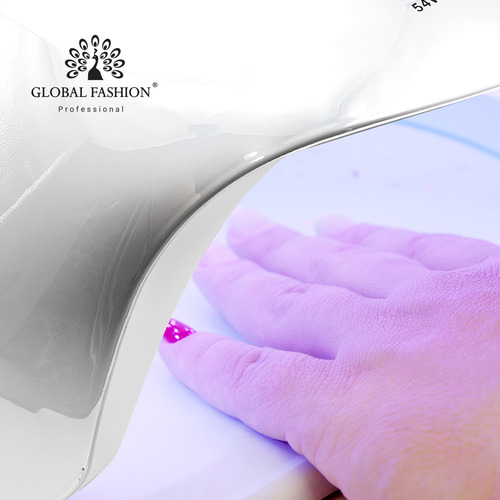
Another advantage of LED lamps is that they emit less ultraviolet light, which can be important for those concerned about skin protection. Otherwise, as long as the lamp and gel are properly matched in terms of power and spectrum, the end result will be the same. Both types of lamps are considered safe with normal use.
Nevertheless, skin protection remains an important aspect. Applying a cream with SPF or using special gloves completely minimizes any risks. This simple step not only increases safety but also makes the manicure process more comfortable and enjoyable.
Which lamp should you choose for curing nails?
If you value a fast and convenient manicure, an LED lamp will be your ideal assistant: it significantly speeds up gel curing, extends the durability of the polish, and minimizes maintenance. At the same time, a UV lamp remains a great option, especially for gels specifically designed for it. Regardless of your choice, both lamps will provide a flawless manicure — durable and impressive.