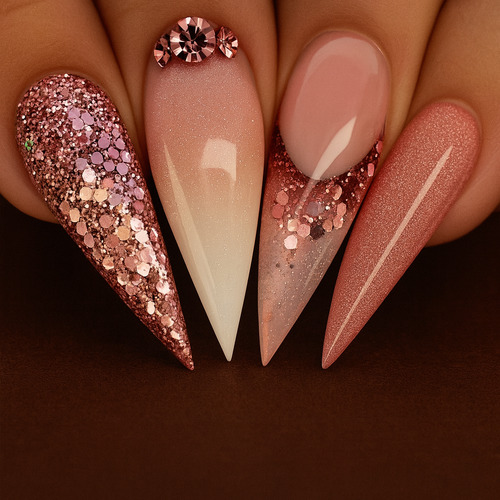
When it comes to long nails with intricate shapes, acrylic remains an indispensable choice. This technique has long been recognized as the optimal way to add length, strengthen the nail plate, and create a perfectly balanced shape. With the growing popularity of nail art, acrylic is making a comeback: it serves as the perfect “canvas” on which any bright and creative designs can truly shine.
If you are still wondering whether acrylic nails are right for you, or if you want to understand how they differ from gel nails—in terms of application method, wear time, and removal process—you will find all the necessary information in our article.
What is an acrylic manicure?
An acrylic manicure is a nail extension method that simultaneously lengthens and strengthens the natural nail plate using a mixture of acrylic powder and liquid monomer. The technician dips a brush into the acrylic liquid, then into the powder, creating a pliable acrylic bead. This bead is carefully spread over the nail bed to form a smooth and even layer. Special plastic forms are used to add length, providing a perfect foundation for the future design.
Once applied, the acrylic hardens and becomes durable, ready to be coated with nail polish or gel—depending on the desired manicure longevity. This technique not only allows for a lengthening effect but also significantly strengthens natural nails. Acrylic manicures are suitable for almost any type of nail, especially for those who want added strength and protection for the nail plate.
How long do acrylic nails last?
Acrylic nails typically maintain a perfect appearance for two to five weeks. Their durability largely depends on careful hand care. Acrylic is highly strong, and with proper application and regular maintenance, it can keep looking flawless for a long time.
Acrylic nails vs. gel nails: what’s the difference?
While acrylic nails have remained popular for many years, gel nails are rapidly gaining popularity as a modern and stylish alternative. Both options provide a long-lasting manicure without chipping, but the choice largely depends on personal preference.
Unlike acrylic, which is created using a mixture of monomers that form a dense paste, gel is applied directly onto the nail and cured under a UV lamp. Gels come in soft and hard varieties: soft gel strengthens the natural nail or serves as a coating over an acrylic base, while hard gel is used for extensions and creating 3D designs. Acrylic, although less versatile in application, usually forms a thicker layer, costs less, and does not require a UV lamp.
Important Recommendations
Acrylic nails are safe when applied and removed correctly. Today, there are less toxic alternatives that can achieve a similar effect without excessive impact on your natural nails.
If you still choose acrylics, there are several important points to consider. First and foremost, make sure the salon is equipped with proper ventilation — this is essential for both your safety and the health of the technician. All nail materials contain chemical components that can be harmful if ventilation is insufficient.
Additionally, acrylic nails are not suitable for people with sensitive skin or a tendency toward allergic reactions, as some components may cause negative effects.
Are acrylics harmful to natural nails?
Acrylic nails can damage natural nails if removed incorrectly — this applies to almost any type of nail enhancement. If proper soaking and careful removal are not done, or if you don’t go to a professional, there is a risk of stripping away the top layers of the natural nail along with the acrylic. Over time, this can make nails thin and brittle. Professionals know when to stop and what to pay attention to during acrylic removal. If you notice your nails becoming weak or brittle, it’s likely the procedure is being done incorrectly.
It’s important to understand that nails can be damaged not only by peeling or scraping off acrylic. Even partial lifting or chipping of the coating puts the natural nail at risk. Therefore, nail care should be a daily habit. When doing tasks that usually stress the nails — such as washing dishes or gardening — be sure to wear gloves for protection.
How to remove acrylic nails

The best way to remove acrylic nails is by soaking. First, gently remove the top layer—top coat and, if necessary, the upper layer of color. It’s important not to file too deeply: you’ll know the top layer is sufficiently removed when the nails lose their shine and become matte.
Next, soak the nails in acetone in a glass bowl or use special clips with cotton soaked in 100% acetone.
Regardless of the method you choose, patience is key: the process can take anywhere from 15 minutes to an hour, depending on the thickness of the acrylic and the extent of filing. The longer the nails are in acetone, the easier the acrylic will come off and the less effort will be required.
⸻
Acrylic nails are the perfect way to simultaneously strengthen and lengthen the natural nail. They give your manicure extra durability, allowing you to enjoy a flawless look for much longer—especially when it comes to intricate designs.
At the same time, it’s important to remember that proper acrylic removal is just as important as application. Improper removal can damage your natural nails and completely negate the strengthening effect. Trust this process to professionals or follow your nail technician’s recommendations carefully to keep your nails healthy and beautiful.