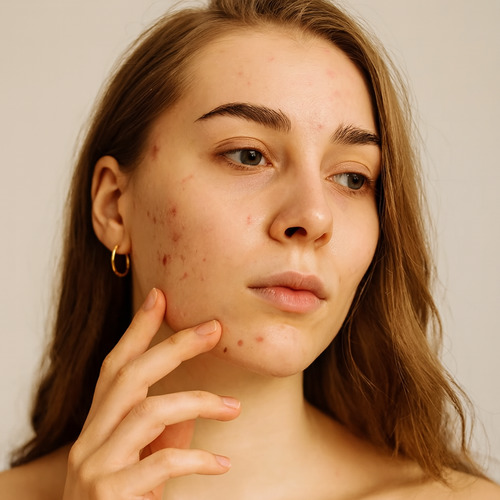
Severe breakouts can cause not only physical discomfort but also emotional distress. However, sometimes the main problem appears after the acne has cleared — scars remain on the skin. Fortunately, acne scars can be treated, and the choice of method depends on their type and the specific characteristics of the skin.
Read on to learn about the different types of scars, effective ways to treat them, and methods of prevention.
Causes of Acne Scars
Acne scars most often develop due to severe inflammation of the skin or from the habit of touching and picking at affected areas. The severity of the scarring depends on how the skin heals, as well as on a person’s genetic predisposition.
Cystic acne, in particular, can cause significant inflammation that disrupts the skin’s natural healing process. In response to the damage, the body may produce collagen in insufficient or excessive amounts. A deficiency of collagen leads to depressed, or atrophic, scars, while an excess results in raised scars.
What are the types of acne scars?
Acne scars are divided into two main types: atrophic and hypertrophic.
- Atrophic scars are the most common type of post-inflammatory skin consequence. They form when the skin loses some collagen during the healing process and fails to fully restore it in the area of former breakouts.
- Hypertrophic scars develop when the skin produces an excessive amount of collagen in the area of previous inflammation.
- Atrophic scars are the most common type of post-inflammatory skin consequence. They form when the skin loses some collagen during the healing process and fails to fully restore it in the area of former breakouts.
- Hypertrophic scars develop when the skin produces an excessive amount of collagen in the area of previous inflammation.
There are several subtypes of acne scars that fall under both main categories. Below is a brief description of some of the most common types you may encounter:
Types of atrophic acne scars:
- Ice pick scars get their name from their characteristic shape, resembling puncture marks made by a sharp object. These scars are deep and narrow.
- Boxcar scars are depressions in the skin with well-defined edges. They are broad in shape and resemble small rectangular or square indentations.
- Rolling scars are wide depressions in the skin that occur when bands of scar tissue pull the surface of the skin downward toward deeper layers. Their characteristic wavy shape is due to rounded edges and varying depths of the depressions.
- Ice pick scars get their name from their characteristic shape, resembling puncture marks made by a sharp object. These scars are deep and narrow.
- Boxcar scars are depressions in the skin with well-defined edges. They are broad in shape and resemble small rectangular or square indentations.
- Rolling scars are wide depressions in the skin that occur when bands of scar tissue pull the surface of the skin downward toward deeper layers. Their characteristic wavy shape is due to rounded edges and varying depths of the depressions.
Types of Hypertrophic Acne Scars:
- Papular scars: These have a “cobblestone” appearance, match the skin tone, and most often appear on the nose and chin.
- Hypertrophic scars: These are thick, dense, raised formations that can be flesh-colored, pink, or brown. They most commonly appear along the jawline, on the shoulders, upper back, and chest, while remaining within the original acne site.
- Keloids: Keloids are dense, raised scars that, unlike regular scars, extend beyond the original acne site. They most frequently form in the same areas as hypertrophic scars: along the jawline, shoulders, upper back, and chest.
How to effectively treat acne scars
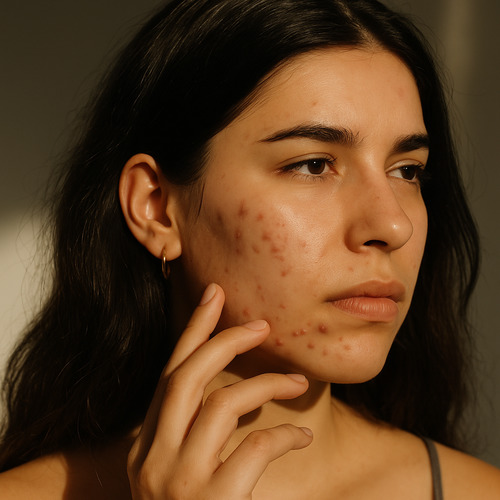
Acne scars can be treated in various ways, with the choice of method depending on the type of scar. Often, a combination of several treatments is used to achieve the best results. Below is more detailed information on the available treatment options:
- Chemical peels: Chemical peels can be an effective way to address mild surface scars. When a special solution is applied to the skin, the top layer gently exfoliates, revealing fresher, renewed skin underneath. This procedure helps noticeably improve skin texture and reduces the visibility of scars.
- Laser resurfacing: This procedure is particularly effective for atrophic acne scars and can also be used to treat hypertrophic scars. The laser carefully removes the damaged top layer of the skin and stimulates collagen production, helping to even out the skin’s surface. As a result, the skin recovers, appearing healthier, smoother, and more radiant.
- Chemical peels: Chemical peels can be an effective way to address mild surface scars. When a special solution is applied to the skin, the top layer gently exfoliates, revealing fresher, renewed skin underneath. This procedure helps noticeably improve skin texture and reduces the visibility of scars.
- Laser resurfacing: This procedure is particularly effective for atrophic acne scars and can also be used to treat hypertrophic scars. The laser carefully removes the damaged top layer of the skin and stimulates collagen production, helping to even out the skin’s surface. As a result, the skin recovers, appearing healthier, smoother, and more radiant.
- Microneedling is an effective method for treating acne scars. The procedure involves creating micro-punctures in the skin using fine needles, which stimulates the skin’s natural repair processes and boosts collagen production. In patients with atrophic scars, this gradually evens out depressions, making the skin smoother and more even. Studies show that microneedling can reduce the severity of acne scars by 50–70%.
- Subcision is a minimally invasive procedure that can effectively address stubborn depressed scars. The method involves inserting a fine needle under the skin to break up fibrous bands that “pull” the skin downward. This approach is particularly effective in freeing and lifting depressed scars, making them less noticeable and improving the overall skin texture.
- Dermal fillers are sometimes used to correct atrophic acne scars. The product is injected into the depressed areas of the skin, which helps to even out the surface and visually lift the indentations. The procedure is quick and provides noticeable results immediately after the session.
- Corticosteroid injections are an effective method for treating hypertrophic acne scars. They help reduce inflammation and control excessive collagen production, making the scars smoother and softer to the touch. This approach is especially useful for patients with pronounced, raised scars, providing a noticeable improvement in the skin’s appearance.
- Trichloroacetic acid (TCA) is an effective treatment for icepick and boxcar acne scars. The procedure involves the precise application of highly concentrated TCA to the base of each scar, which stimulates the skin’s natural healing processes and makes the scars less noticeable and more superficial.
How to prevent acne scars from forming
To reduce the risk of acne scars, it is important to start treatment as early as possible and carry it out effectively. Controlling inflammation helps lower the likelihood of severe breakouts, which are the most likely to leave marks on the skin. This is especially relevant for inflammatory lesions, deep cystic acne, or nodular forms of acne. Timely therapy helps minimize the risk of serious breakouts that could lead to scarring.
Another important point is to avoid touching, squeezing, or picking at pimples. These actions increase inflammation and significantly raise the likelihood of scar formation.
If you have acne or already developed scars, be sure to consult a certified dermatologist to develop an individualized treatment plan that will help maintain the health and beauty of your skin.
⸻
Acne scars can cause significant discomfort, but they are not a life sentence — they can be treated effectively. With patience, the guidance of an experienced dermatologist, and proper treatment, the skin can improve noticeably. It is especially important to work with a doctor to identify the causes of the scars and take steps to prevent them in the future.
Read also: 12 Foods That Make Your Facial Skin Oily and What to Replace Them With
Read also: 12 Foods That Make Your Facial Skin Oily and What to Replace Them With